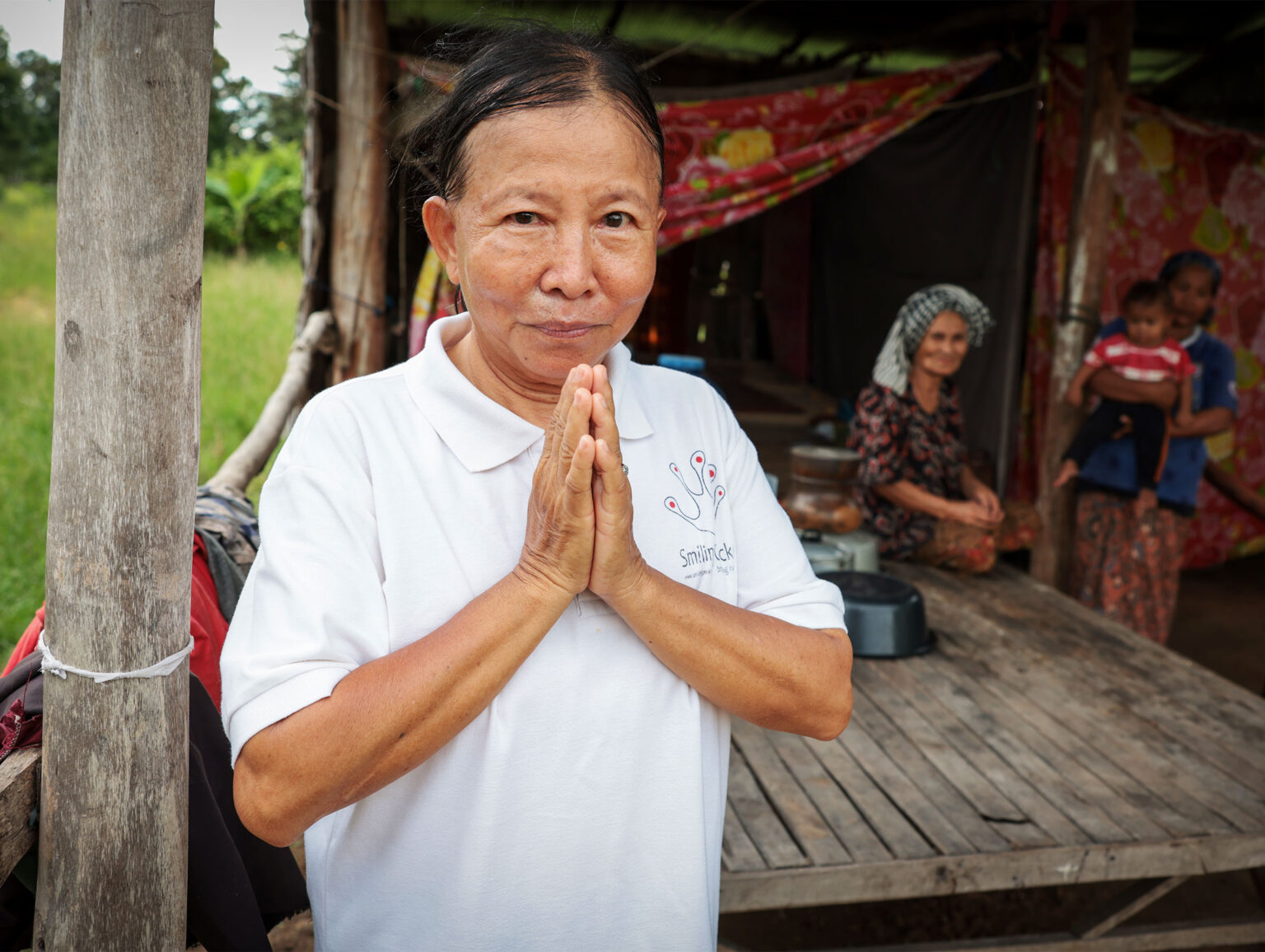
The faces of poverty
A conversation with our social worker Sopheary
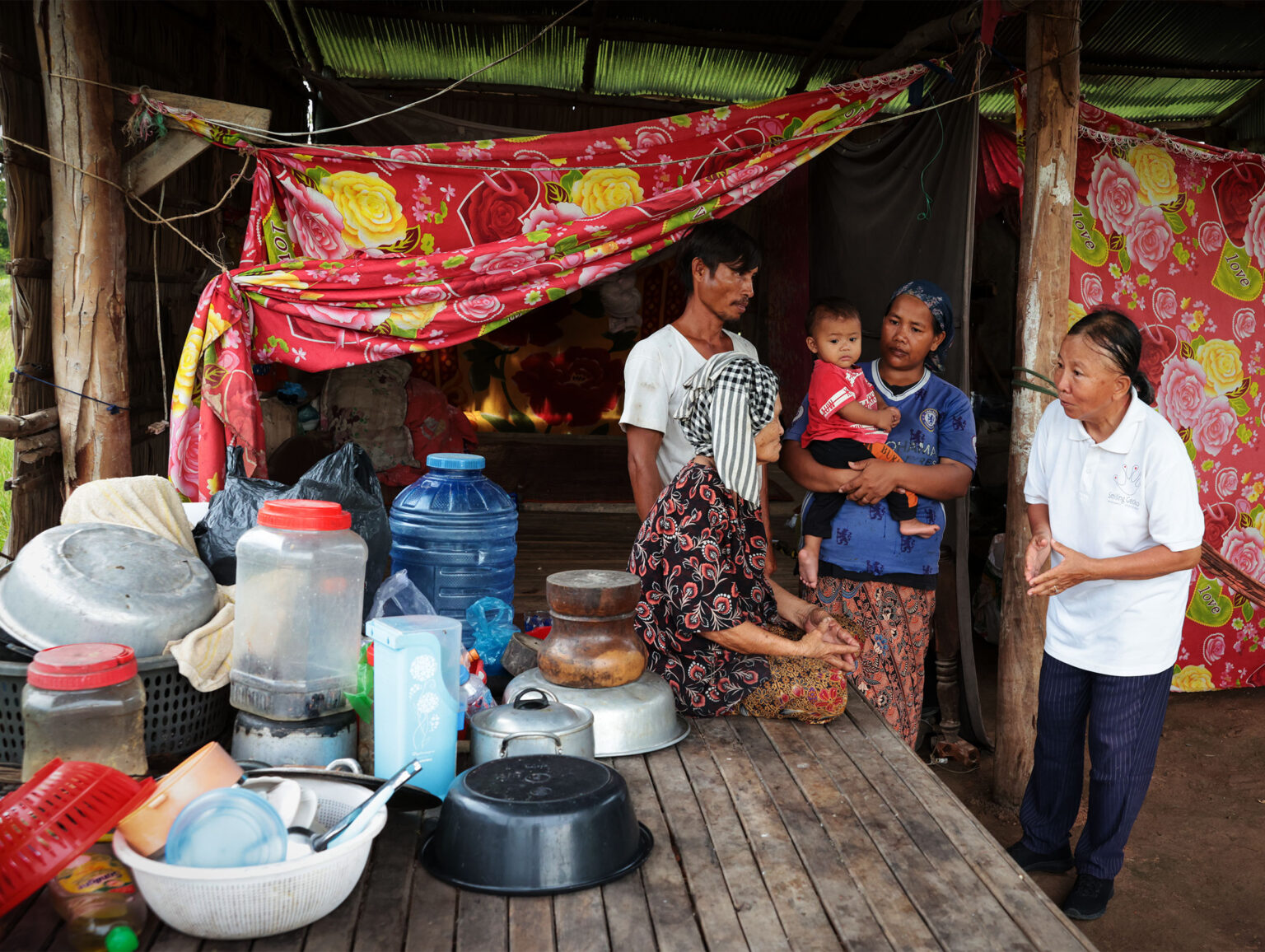
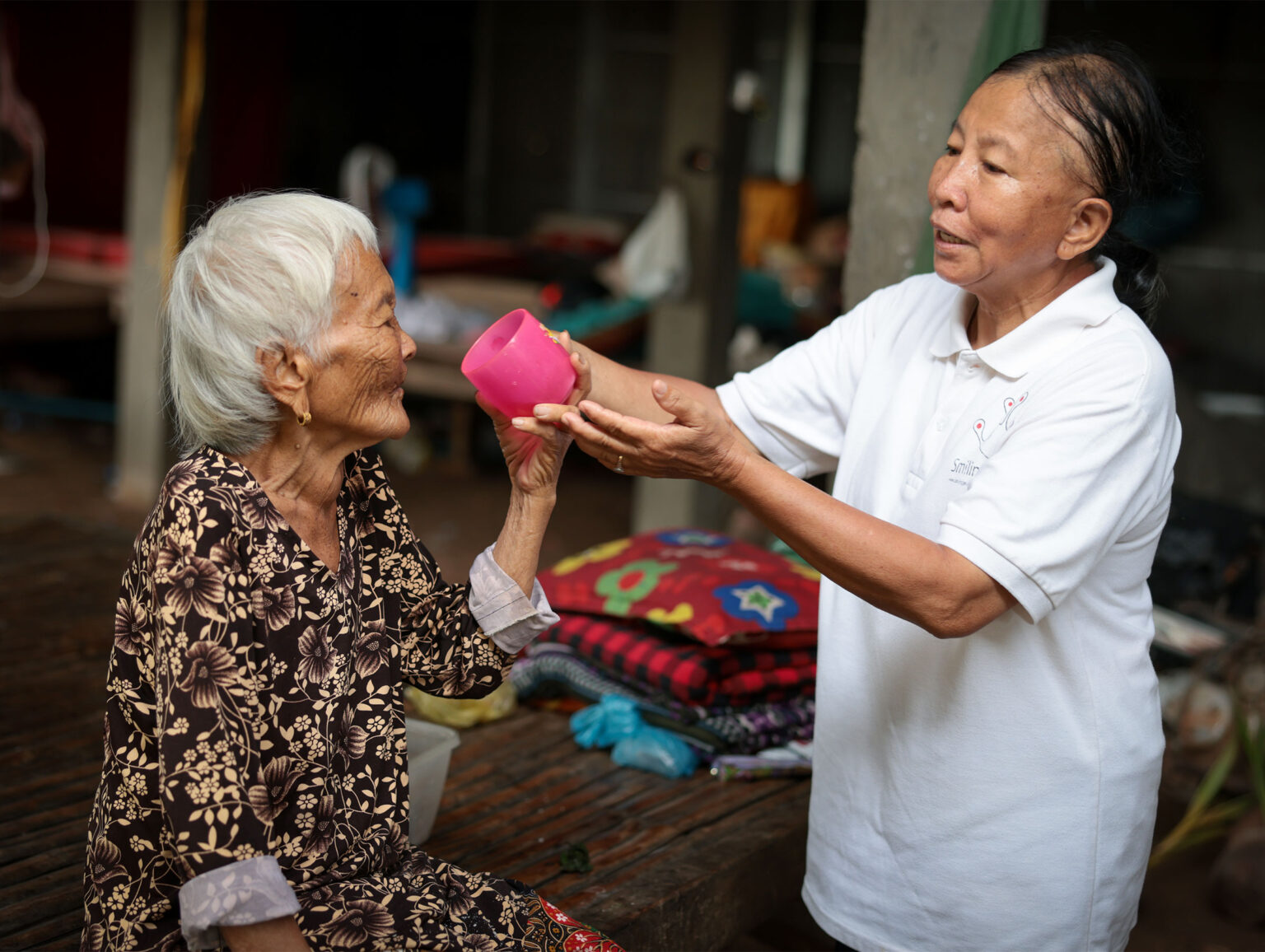
In our teacher interviews we heard a lot about the poverty and lack of prospects in the area around the Smiling Gecko Campus and the challenges faced by the teachers and of course the children every day. We wanted to know more about the situation in the families and so we met for an interview with Srunn Sopheary, who is a social worker who travels around the campus daily and is one of the most important links between the NGO and the families for us.
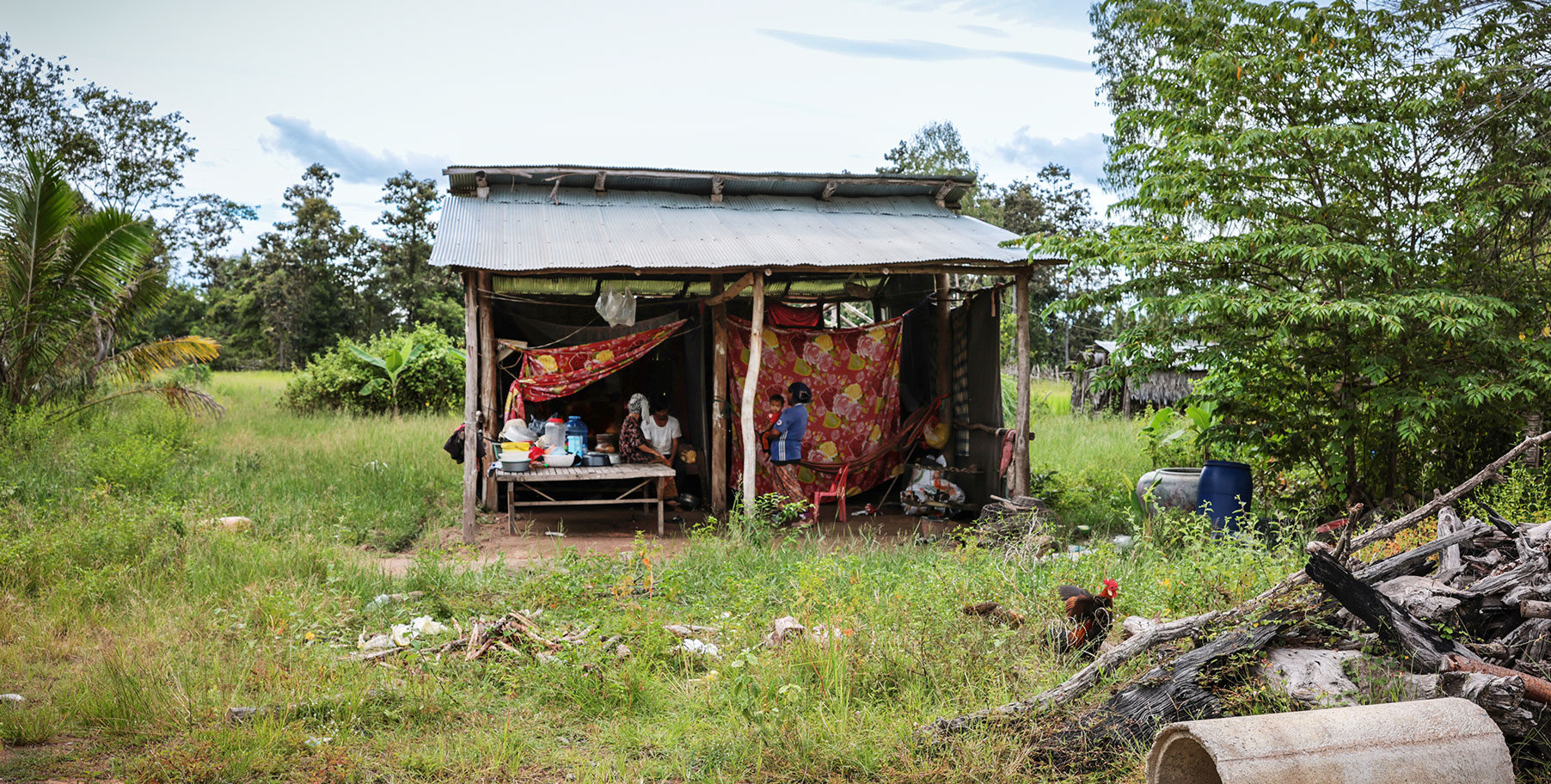
When touring the area around our campus, you will notice the many people who gather in and around the huts along the way. How should we imagine a typical family around here?
There is a wide range of family constructs in the communities surrounding the campus. A nuclear family often lives together, consisting of six to eight members. But due to financial constraints, larger households with ten or more members are not uncommon. Here, several generations usually live under one roof.
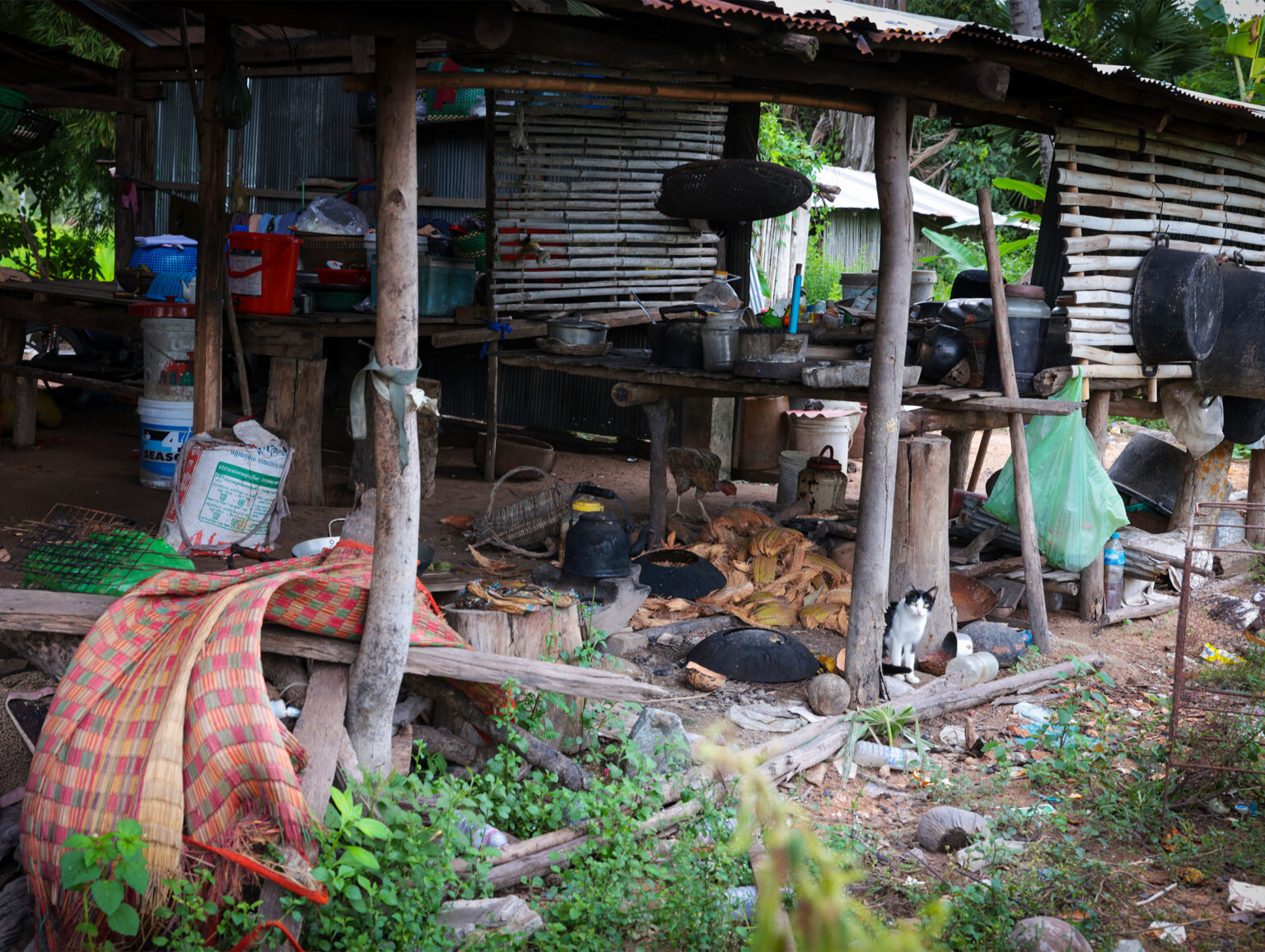
Up to ten people in a simple stilt house or a corrugated iron hut: not a nice idea. Especially since the weather conditions are very demanding with the extreme heat and the incredible amounts of rain.
That’s correct. The houses and huts lack practically everything. Most do not have access to clean, running water. The hygienic conditions are precarious. There is no storm protection and no cooling options. All of these factors present families with the greatest challenge when it comes to creating and maintaining a healthy living environment.
For us, such a life is simply unimaginable. In rural Cambodia it is the norm. Let’s stick with what we can’t imagine: According to estimates by the World Bank, the average income in Cambodia, adjusted for purchasing power, is $4,430. That’s very little but given the living conditions here it almost seems a bit exaggerated.
Way to high. I’m assuming more like $175 a month – that is the minimum wage in the clothing factories. Anyone who doesn’t work there has to earn an income from farming. Income here fluctuates greatly and can quickly fall below $100 a month.
$100 a month? That can’t work at all. How much money does it take to provide a normal-sized family with the most important food items for a month? For example, how much does a kilo of rice cost? How much per liter of vegetable oil. A chicken, the vegetables?
A kilo of rice costs $0.60, a liter of vegetable oil costs $2.25. A kilo of chicken costs $5.50, a kilo of fish costs $4.50, the same amount of vegetables costs around $1.50 and even a chicken egg costs $0.15. If you calculate these costs based on the size of the family, essential grocery shopping alone should be around $150 a month.
This means that many families do not have sufficient money to buy enough food. In this context I must think about my first visit to school. It was a Monday and I noticed that some of the children seemed very tired at the flag roll call every morning. I thought that was cute. Until I heard why the children were so lethargic: They hadn’t had enough to eat since their last school meal on Friday because there wasn’t enough for everyone in the family, and they would receive something at school. I was very ashamed. And I really don’t envy your job as a social worker. Even though I can’t quite imagine what your job really looks like. Maybe you would like to tell us a little about the challenges you face every day.
People here often have massive communication problems, which makes my job very demanding. This is probably difficult for you to understand, but those who lack general education also have great difficulty communicating or expressing themselves. I notice this again and again when I talk to families about their rights and responsibilities as citizens. They know neither one nor the other and find it difficult to understand more complex connections. This then leads, for example, to the family not taking advantage of the little government assistance they receive because they cannot imagine what this assistance looks like. There are also always problems within families and in communities because there is a lack of a common language. Or rather, the understanding of connections is simply not there. People hear what you say, but they often don’t understand what you’re trying to convey. Of course, this makes it even more difficult to provide them with meaningful support. Overcoming these challenges requires a combination of patience and empathy. And it certainly helps if you know the cultural background and special features here.
I imagine that to be very demanding. And that brings me to another tricky point. The teachers have repeatedly spoken about problems with domestic violence and alcohol abuse.
Yes, many things happen that are unacceptable. Alcohol is often an issue. One of the truly terrible side effects of my job is when I hear about cases involving families supported by Smiling Gecko. It is frustrating and can be discouraging when people cannot follow even the simplest guidance because they have difficulty understanding and implementing instructions.
Can you give us an example here?
Let’s take the families who turn to us too late when they find themselves in financial crisis. Instead of working with us to find a solution in a timely manner, they worsen their already precarious situation by taking out additional microloans with ruinous interest rates. Even purchasing a used scooter can lead to disaster. For example, the loss of their own arable land.
Brutally. But hopefully there are also beautiful moments in your daily work. Maybe you would like to tell us something about it too.
Yes, there are those too. For example, when I see our children going to school. And of course, the situations in which I feel the positive effects of my efforts as a social worker. Being there as families experience small moments of happiness and progress is incredibly rewarding. When I watch them take steps toward self-determination, gain skills, and make positive changes in their lives and those of their families, it confirms the value of my work. Seeing their smiles and their success is a source of inspiration and fulfillment that motivates me in my work.
Finally, we want to dream a little together. What would your wishes be if, for once, money didn’t play a role: for you personally and your work and for the people who live around the campus.
I would like to continually improve my skills and knowledge as a social worker. I would invest in training and professional development opportunities that would allow me to support people and families more effectively and effectively. My greatest wish for my work would be to see significant positive changes in the lives of all beneficiary families. How wonderful it would be if the people surrounding the campus all had access to quality education and vocational training, as well as resources that enable them to create stable and sustainable sources of income for the entire community. I envision thriving local businesses, collaborations, and skills-sharing initiatives that benefit not only individual families, but also the collective well-being of the community.
Dear Sopheary, you can be sure that we will continue to do everything we can to ensure that your wishes come true.